
Thao Kelly-Maybee
There is something special about a song that can make the ordinary feel extraordinary. Sometimes, it is not about discovering something new, but about experiencing something familiar in a completely different way. With her latest release, “Magic,” Hailee Steinfeld brings new life to a beloved classic, reminding listeners of the feeling of being swept up in something that seems almost too good to be true.
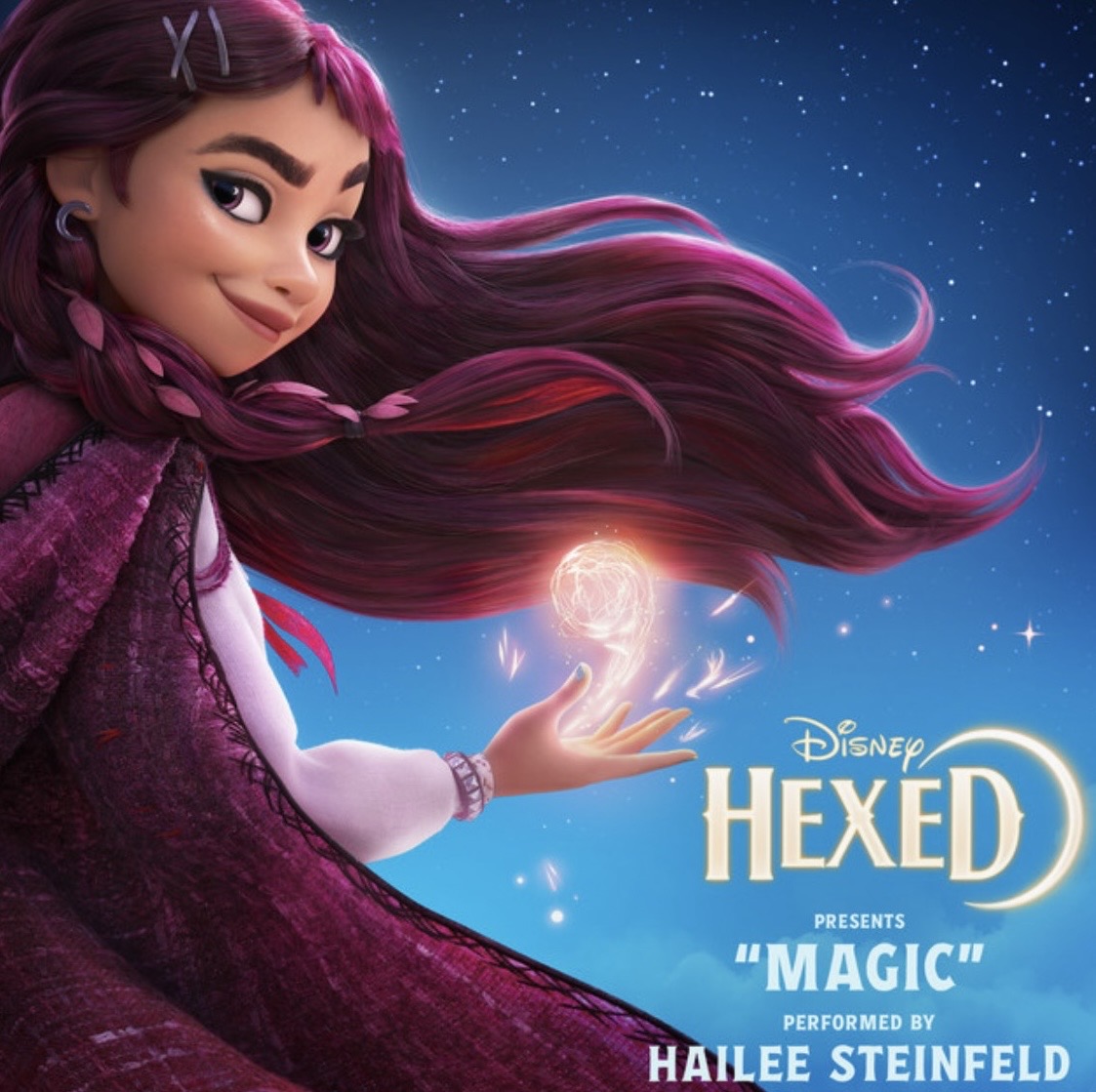
Released on October 23, 2026, Steinfeld’s version of “Magic” is a cover of The Cars’ 1984 hit, originally featured on their album Heartbeat City. The new recording was released in connection with Disney’s upcoming animated film Hexed, in which Steinfeld voices the lead character, Billie Doe. The film follows a teenage girl who discovers extraordinary magical abilities, making the song a fitting companion to a story about the unexpected wonder hiding within everyday life.
For Steinfeld, the release also represents a meeting of two creative passions. Known for balancing her acting career with her work as a singer, she has contributed music to several film projects throughout her career. In a statement shared through her newsletter, she described the opportunity to record “Magic” for Hexed as a particularly meaningful one, explaining that she recorded the track with her childhood friend Demitri Lerios. The experience brought together her love of music and acting in a project that feels especially personal.
But what makes “Magic” such an interesting choice for Steinfeld is the way its central idea can mean so many different things.
At first, the title suggests something fantastical: the kind of wonder associated with impossible things becoming possible. Yet the magic the song evokes does not need to be understood literally. It can also represent the feeling of being completely captivated by someone or something, when an otherwise ordinary moment suddenly feels extraordinary.
That feeling is part of what has allowed the original song to remain recognizable decades after its release. There is an uncomplicated charm to the idea that something can transform the way we experience the world simply because of how it makes us feel. It is a sentiment that does not require an elaborate explanation. Sometimes, the feeling itself is enough.
Steinfeld’s interpretation introduces this familiar sentiment to a new audience while connecting it to a film built around the discovery of the extraordinary. In Hexed, Billie finds herself navigating a world that challenges everything she thought she knew about herself. Her newfound abilities open the door to a much larger story, one in which the seemingly impossible becomes part of her everyday reality.
The connection between the song and the film is particularly fitting because both invite us to reconsider what we believe is possible. Magic, in this context, becomes more than a supernatural ability. It becomes a way of looking at the world with curiosity, allowing ourselves to be surprised by what we discover.
There is also something fitting about Steinfeld taking on a song that already carries its own history. Covering a well-known track presents a unique challenge: how do you make something familiar feel fresh without losing the qualities that made people fall in love with it in the first place?
The answer lies in interpretation. A cover does not have to erase the original to establish its own identity. Instead, it can introduce a different voice, a different context, and a different generation of listeners to the same musical idea.
Steinfeld’s version arrives with the advantage of its connection to Hexed, giving the song a new narrative setting. Listeners who grew up with The Cars’ original can approach it through nostalgia, while younger audiences may discover it through Disney’s upcoming film. The result is an opportunity for a familiar song to become part of a new cultural moment.
Her experience as both an actor and a singer also makes the release particularly appropriate. Music connected to film has the ability to carry meaning beyond the recording itself. A song can become associated with a character, a scene, or a particular feeling that stays with an audience long after the credits roll. Although audiences have yet to see the film in full, “Magic” already establishes a musical connection to the world Billie is about to enter.
There is something genuinely lovely about that connection. Stories about magic often begin with the discovery that the world is larger than we imagined. They encourage us to question the limits we have placed on ourselves and to consider the possibilities we might have overlooked. By bringing “Magic” into the world of Hexed, Steinfeld helps introduce that sense of wonder before the film even reaches theatres.
In the end, “Magic” is a reminder that music does not always need to reinvent itself completely to find a new audience. Sometimes, a familiar melody can find another life through a new voice and a new story. Its meaning can shift with the listener, becoming attached to memories, relationships, or moments that make the song feel personal.
Perhaps that is the real magic of a song like this: its ability to remain familiar while becoming something new. Whether listeners approach it as a nostalgic favourite, a fresh interpretation, or an introduction to the world of Hexed, Steinfeld’s version invites them to rediscover the wonder that can exist in the things we thought we already knew.
